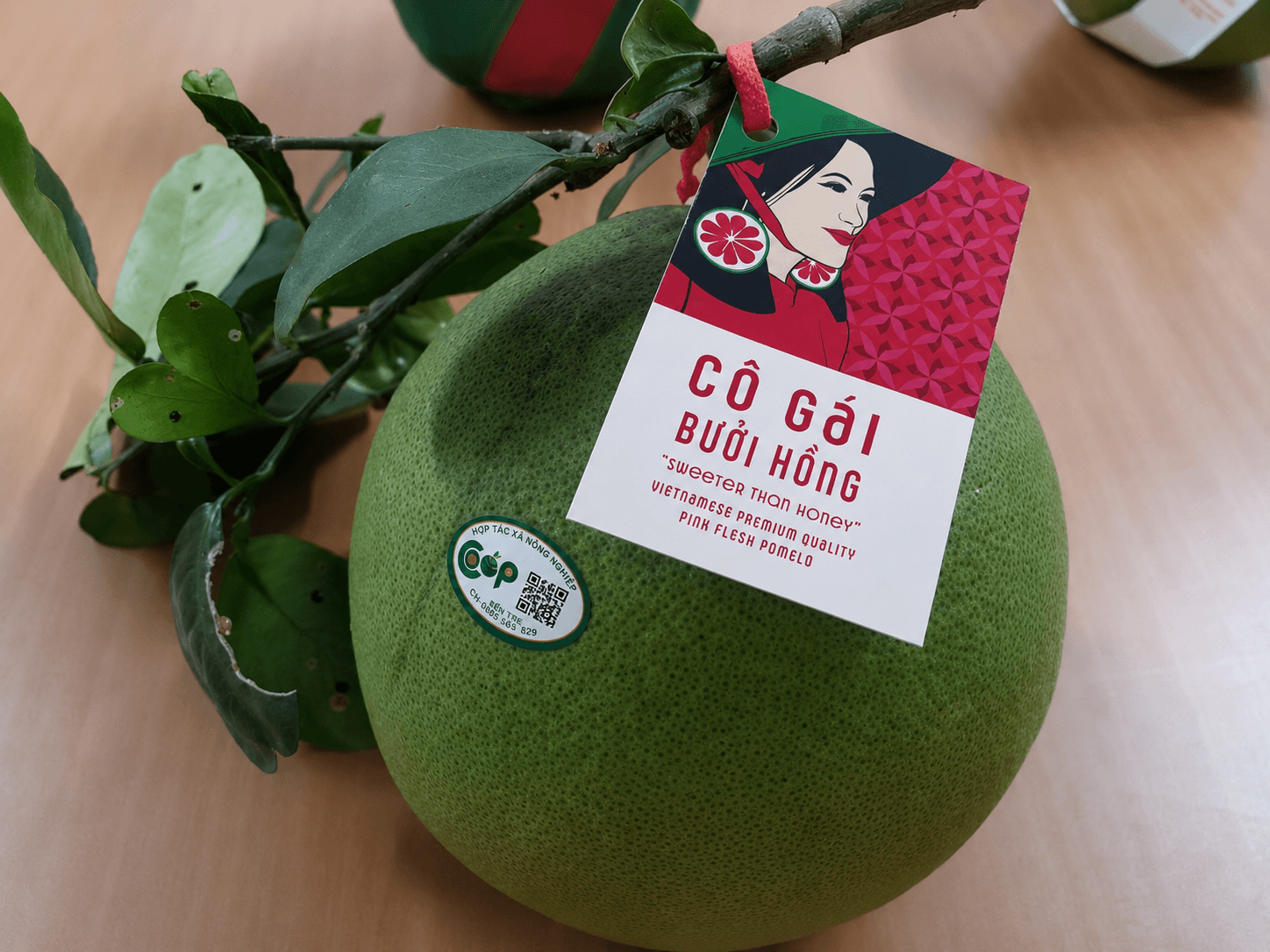
The Philosophy of “Disciplined Agriculture”
At Ben Tre Green Pomelo Cooperative, premium citrus export quality is not an accident of nature; it is the direct outcome of Disciplined Agriculture (Nông Nghiệp Kỷ Luật).
Developed through intensive multi-year technical cooperation with SOCODEVI (under the Canada-VCED initiative) and senior agronomy experts from PUM Netherlands, our operating model unites more than 445 member households across 100+ hectares under standardized, verifiable agricultural protocols.
WHY: Long-term ecological balance and dependable farmer livelihoods.HOW: Standardized orchard SOPs, biological pest control, and a 21-day pre-harvest interval.WHAT: Consistent, residue-tested, GlobalG.A.P.-certified Pink Lady Pomelo.The 8-Stage Orchard-to-Container Process
Every export-grade Pink Lady Pomelo passes through a tightly coordinated eight-stage lifecycle designed to eliminate quality variance and ensure absolute food safety.
flowchart TD A[Stage 1: Soil & Root Management] --> B[Stage 2: Biological Pest Control] B --> C[Stage 3: Individual Fruit Bagging] C --> D[Stage 4: 21-Day Pre-Harvest Interval] D --> E[Stage 5: Maturity-Calibrated Harvest] E --> F[Stage 6: Packinghouse Sanitization & Bio-Wax] F --> G[Stage 7: Electronic Calibration & 5-Grade Sizing] G --> H[Stage 8: Pre-Cooling & Cold Chain Buffer]Stage 1: Soil Ecology & Root Nutrition
- Orchard Geography: Located on natural alluvial river levees in Chau Thanh and Cho Lach districts along the Tien River, enriched by annual Mekong sediment deposition.
- Nutrient Regimen: Systematic soil testing, pH maintenance (5.8–6.5), high-grade organic microbial compost, and deep-dike irrigation management preventing root waterlogging during monsoon months.
Stage 2: Biological Pest Management & Biodiversity
- Weaver Ant Biocontrol (Oecophylla smaragdina): Managed colonies of beneficial weaver ants are propagated across orchard canopies. They provide natural predatory defense against citrus psyllids (Diaphorina citri), leaf miners, and stink bugs, drastically reducing chemical interventions.
- Biobed Environmental Protection: Member farms feature engineered Biobed bio-filtration pits containing clay, straw, and organic peat to bio-degrade farm rinse water and protect regional groundwater tables.
Stage 3: Individual Protective Fruit Bagging
- Timing: 45 to 60 days post fruit-set, when young fruits attain egg-size diameter.
- Protection: Every individual fruit is manually encased in specialized two-layer breathable agricultural paper bags.
- Benefits: Complete physical barrier against fruit flies (Bactrocera dorsalis), peel-boring caterpillars, fungal spore deposition, and solar rind scorch, while preserving uniform chlorophyll rind pigmentation.
Stage 4: 21-Day Strict Pre-Harvest Interval (PHI)
- Quarantine Protocol: All organic and permissible inputs are suspended at least 21 days prior to scheduled harvest.
- Residue Security: This quarantine window ensures that natural plant enzymes metabolize any residue traces, guaranteeing full compliance with destination-market Maximum Residue Limits (MRLs).
Stage 5: Selective Maturity-Calibrated Harvest
- Readiness Indices: Fruits are inspected individually for specific harvest maturity: oil gland expansion, flattening of the fruit blossom-end, and calibrated Brix levels (≥10.0° in rainy season, 10.5°–13.0° in dry season).
- Tool Sterilization: Harvest teams use alcohol-disinfected stainless steel shears, leaving a clean 0.5–1.0 cm pedicel (stem button) to seal the fruit crown.
- Damage Prevention: Hand-picked into soft canvas collection aprons and transferred to padded field crates, preventing peel abrasion.
Stage 6: Automated Sanitization & Bio-Wax Coating (VND 14B Packhouse)
- Central Facility: Delivered within 4 hours to our dedicated VND 14 billion, 4,000 m² clean packinghouse in Phu Tuc Commune, operating under certified HACCP Codex Alimentarius protocols.
- Ozone Sanitizing Bath: Submerged in circulating ozonated water baths to eliminate surface fungal spores without hazardous chemicals.
- Gentle Mechanical Brushing: Soft natural-bristle cylindrical brushes remove dust and field deposits.
- Carnauba Bio-Wax Application: A micro-thin layer of food-grade, plant-derived Carnauba wax is applied to seal microscopic rind stomata, reducing transpirational weight loss and extending shelf life to 85–100 days.
Stage 7: Optical Calibration & 5-Grade Sorting
- Electronic Sizing: Calibrated sorting lines segregate fruit into 5 standardized export weight classes:
- Grade XL: 1.8 – 2.2 kg (5 fruits / carton)
- Grade L: 1.5 – 1.8 kg (5–6 fruits / carton)
- Grade M: 1.2 – 1.5 kg (6–7 fruits / carton)
- Grade S: 0.8 – 1.2 kg (8–10 fruits / carton)
- Grade XS: 0.6 – 0.8 kg (10–12 fruits / carton)
- Quality Rejection: Fruits displaying hail marks, rind blemishes >5% surface area, or asymmetrical balance are diverted from premium export packing.
Stage 8: Protective Packaging & Cold Chain Pre-Cooling
- Protective Sleeves: Each fruit is fitted with a soft protective EPE foam sleeve and breathable mesh netting.
- Export Cartons: Packed into heavy-duty 5-ply corrugated export cartons (9.5 kg net weight, 460 x 310 x 210 mm) engineered to withstand 500 kg stacking compression.
- Pre-Cooling: Palletized cargo enters forced-air pre-cooling chambers at 10°C–12°C before loading into pre-tripped 40ft refrigerated containers maintained at 5°C–7°C.
Technical Audit & Verification Documents
Download B2B Product & Supply Guide
Access our official 14-page guide detailing orchard SOPs, quality assurance protocols, packaging diagrams, and international certifications.
Related Operational Standards:
- Standard Operating Procedures (SOP) — Detailed orchard hygiene and harvest protocols.
- Quality Control & Lab Testing — 700–1,018 active substance pesticide screening.
- Traceability Architecture — Orchard unit identification and batch tracking.